
The goal of the Ken Kennedy Institute's Research Cluster Initiative is to further strengthen the research identity of the Institute, develop distinct capabilities in the fields of AI and Computing, and support faculty in pursuing larger funding opportunities. Proposals for the initiative are solicited periodically to ensure that the clusters reflect the interests and expertise of the Institute's members. This year we are excited to expand the initiative to support a total of 20 cross-departmental research clusters and working groups across distinct research focuses. View details about each Ken Kennedy Institute-supported group below.
Focus Areas

1) AI and Computational Biology for Health
PI: Vicky Yao
The AI2Health cluster aims to position Rice as a leader in interpretable, biology-grounded AI and computational biology research that yields mechanistic insight to predict, prevent, diagnose, and treat human disease. They will use multi-omics integration, structure-aware machine learning methods, graph signal processing and network inference to advance minimally-invasive cancer detection, design more targeted and effective cell therapies, and accelerate discovery through open, integrated-omics resources and reference maps. Learn more.
2) AI and Operations Research for Cancer Care
PI: Andrew Schaefer
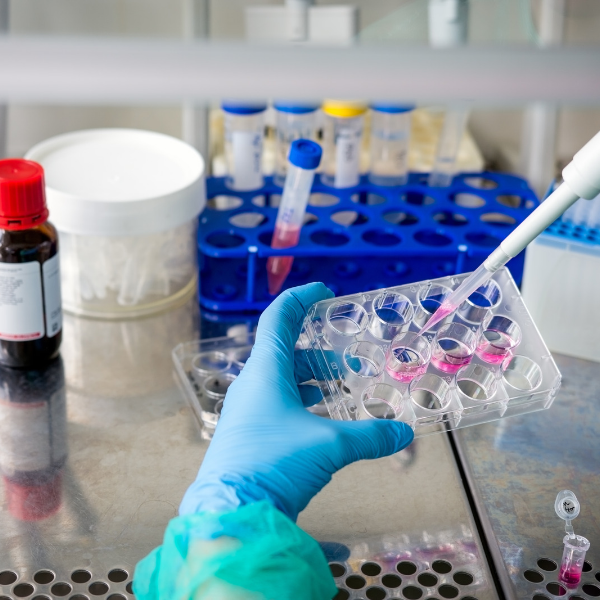
This group aims to establish Rice as the leading academic center for the development and translation of operations research methods for cancer care, anchored by a deep and sustained partnership with Texas Medical Center. The group brings together experts from Rice University and MD Anderson Cancer Center to use data and modern computer science to anticipate, plan, and deliver cancer patient needs faster and more fairly—working to allocate scarce diagnostic capacity across a multi-clinic network for optimal care delivery. Learn more.
3) AI for Autonomy
PI: Sasha Davydov
The goal of this cluster is to position Rice University as an academic leader in developing fundamental methods for autonomous systems and robotics. The work will tackle failures at the interfaces of autonomy stacks by developing bidirectional information flow assured learned execution on physical platforms, and joint optimization—aiming to create trustworthy, self-repairing autonomous systems that can perceive, plan, control, and compute using agentic AI. Learn more.

4) AI for Catastrophe Modeling and Urban Resilience
PI: James Doss-Gollin
This cluster aims to transform disaster management through next-generation, physics-grounded AI frameworks that simulate rare, high-impact hazards—such as hurricanes and floods—and model their cascading impacts across interconnected infrastructure systems. Their work helps predict, understand, and reduce the impact of disasters before they happen, providing data-backed actionable insights that will help build stronger, more resilient communities. Learn more.

5) AI for Ecology
PI: Cesar Uribe
This cluster focuses on building trustworthy and human-centered AI for understanding and responding to ecological change. The team will build AI tools and models to transform fragmented ecological and climate data into actionable knowledge for species discovery, biodiversity monitoring, conservation planning, climate adaptation and hydrology, and environmental resilience and restoration. This breadth of the cluster gives Rice a unique opportunity to define AI for Ecology as mathematically rigorous, climate-aware, ecologically grounded, statistically principled, and socially meaningful. Learn more.
6) AI for Genetic Design
PI: Oleg Igoshin
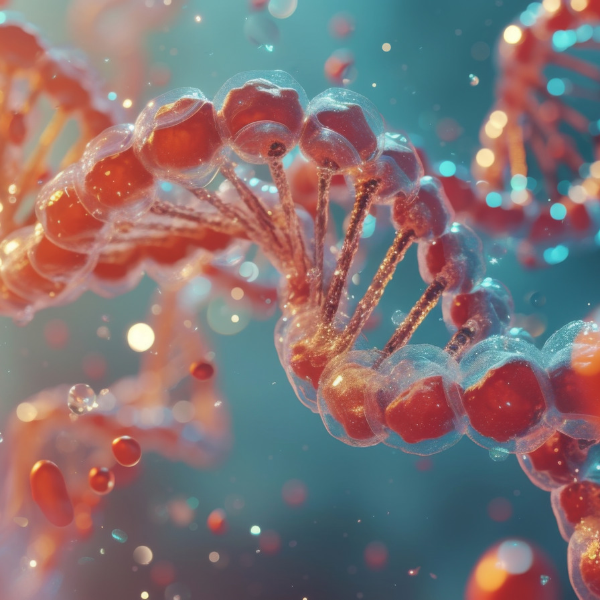
Despite tremendous progress in molecular biology over the last 50 years, our ability to predict the behavior of DNA-encoded molecules and systems based on their underlying genetic code remains limited. This group combines machine learning and AI researchers with experimental synthetic biologists to develop innovative computational solutions to biotechnology challenges. They leverage existing datasets to predict functional properties of genetic parts and their interactions, while improving interpretability and generalizability of the AI models by incorporating biophysical knowledge into the model architectures. Learn more.

7) AI for Home Health
PI: Momona Yamagami
This group works at the intersection of AI, digital health, neuroengineering, wearable sensing, wireless systems, and robotics to create AI-mediated home health technologies across the ability spectrum. They aim to develop AI-driven frameworks that infer intent from multimodal biosignals and adapt assistive modalities and interventions to the needs and preferences of individual users with motor disabilities—positioning Rice as a leader in closed-loop, AI-driven assistive neurotechnology. Learn more.
8) AI for Biosecurity and Microbial Monitoring
PI: Todd Treangen
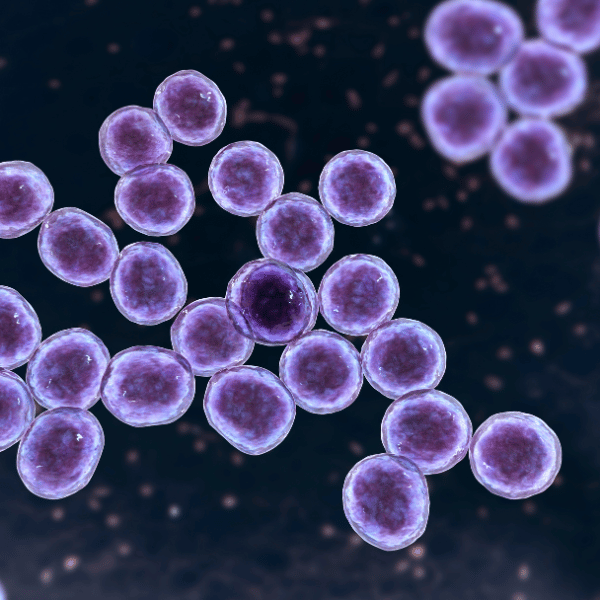
This cluster works toward transformative, public health-inspired AI and computational biology research relevant to biosurveillance, biosecurity, and active monitoring of microbial threats. They focus on scalable AI for early pathogen detection, antimicrobial-resistance tracking, wastewater-based epidemiology, and outbreak response. They use robust technology platforms, open-source software, and interpretable machine learning models and computational frameworks to enhance biosurveillance capacity and advance early warning systems for pathogen outbreak detection, tracking, and mitigation. Learn more.
9) Next-Generation AI Systems
PI: Yuke Wang
Without major advances in computing infrastructure, next-generation AI risks becoming prohibitively expensive and accessible only to a small number of organizations. This cluster is building the computational foundations to make frontier AI more efficient, sustainable, and broadly deployable by re-inventing how hardware and software work together. Their work pursues a full-stack co-design of software systems and hardware accelerators that speak the language of AI natively and can run AI models smoothly across distributed networks. Learn more.

10) Analog Dynamical-System Machines
PI: Kaiyuan Yang
This cluster aims to establish a new Dynamical-System Machine (DSM) computing paradigm—built at Rice—that replaces digital logic with analog dynamics to create ultra-efficient, real-time "digital twins" for compact AI reasoning, power grids, wireless infrastructure, and scientific discovery. This cluster’s work supports initiatives at Rice for building sustainable futures and thriving urban communities. Learn more.

11) AI for Social Systems
PI: Corey Abramson
This team forms a cross-disciplinary cluster for rigorous, interpretable, and actionable AI to transform data from black-box prediction to evidence-informed decisions in complex social systems. Their work combines computational social science, statistics, economics, and psychological sciences—using AI grounded in statistical inference to detect change and explain social dynamics for policy and public consequence. CAUSE-AI will help decision-makers distinguish structural shifts from noise, identify affected groups, and quantify uncertainty in the timing and magnitude of change. Learn more.

12) Electromagnetics to Artificial Intelligence
PI: Rahman Doost-Mohammady
The EM2AI cluster aims to holistically connect modern AI methods and physical systems—envisioning future systems as an end-to-end intelligent stack, spanning electromagnetic waveforms, analog and digital hardware, communication, sensing, computation, and human interaction, with AI co-designing and optimizing each layer. They aim to position Rice as a global leader in 6G, digital health, security, defense, and beyond. The team covers every layer of the physical system stack, spanning electromagnetic wave propagation, hardware implementation, signal processing, mobile computing, and information rendering. Learn more.

13) Trustworthy AI: Advancing Privacy, Fairness, & Alignment
PI: Maryam Aliakbarpour
This cluster aims to build a rigorous, theory-driven foundation for “AI Alignment” to design trustworthy and responsible AI systems whose behavior reflects human goals, values, and welfare. This work moves from benchmark settings to high-stakes social environments where alignment and contextual integrity is a central priority. The TRUST-AI team combines expertise in statistics, machine learning, economics, decision theory, fairness, privacy, and preference modeling. Learn more.
14) Human-Centered Artificial Physical Intelligence
PI: Vaibhav Unhelkar
This cluster advances foundational research for physical AI agents, such as robotic assistants and intelligent tutors, that interact directly with humans—prioritizing responsible design, safety, user alignment and evaluation to enhance human capability. Their interdisciplinary approach integrates reasoning methods such as reinforcement learning and task planning; benchmarking tools to ensure safety and correctness; explainability and interaction design to support interpretable behavior; and human-in-the-loop evaluation frameworks from psychological sciences to ensure that technical development remains grounded in human needs. Learn more.
15) Multimodal Agentic Perception and Learning
PI: Guha Balakrishnan
The goal of the MAPLE cluster is to develop multimodal AI agents capable of continuous, active perception and real-time physical adaptation. The team will co-design hardware-level sensors and foundation models into a unified, end-to-end inference framework to enable reliable, autonomous decision-making in high-stakes environments such as healthcare and environmental science. The team unites expertise across computer vision, natural language processing, machine learning and agents, and computational imaging. Learn more.

16) AI for Geoscience
PI: Noemi Vergopolan
Earth systems are changing in ways that directly affect society, making it difficult to monitor and understand issues with water availability, flooding, sea levels, and earthquakes. At the same time, scientific data streams produce fragmented observations that differ in spatial resolution, measurement frequency, uncertainty, and geographic coverage. This cluster develops multimodal geosensing AI methods to integrate diverse Earth observations—such as satellites and seismic networks—to discover hidden Earth states and governing relationships for water resources, floods, and geophysics. Learn more.
17) Quantum Computing
PI: Tasos Kyrillidis
Quantum computing promises exponential speedups, but the field lacks systematic frameworks to fairly evaluate when, how, and why quantum algorithms provide real advantages. The QuanTAS cluster establishes a vertically integrated hub for quantum-computing research that combines theory, algorithms, and systems to determine when quantum computers deliver scientifically meaningful answers faster than classical methods—building both the theory and the tools that the field needs. Learn more.

18) Scientific Machine Learning for Efficient Predictive Modeling
PI: Matthias Heinkenschloss
This group aims to develop AI-assisted predictive simulations to accelerate, or enable, important “outer-loop analyses,” such as uncertainty quantification and optimization-based decision-making, with applications across energy, the environment, and resilient urban infrastructure. The cluster's work integrates physics-based scientific computing models with data-driven AI models to develop new, efficient, interpretable, mathematically grounded computational models. Learn more.

19) Generative AI and Memory-Efficient Computing
PI: Anshumali Shrivastava
The next phase of AI will be defined by systems that can reason longer, use more context, and allocate computation at test time without making inference prohibitively slow, expensive, or energy-intensive. This cluster will develop AI architectures that avoid unnecessary memory movement, making Rice a leader in memory-efficient AI systems that overcome the memory wall through learned sparsity—touching only the context and model memory each reasoning step needs to enable longer context, stronger recall and auditability, and deeper reasoning with far less energy. Learn more.
20) AI for Quantum Defects
PI: Shengxi Huang
Defects in materials, such as atomic vacancies, doping, substitutions, and their combinations, can be beneficial in many cases. This cluster aims to develop an AI-driven approach to enable defect-by-design, and apply the AI framework to study quantum defects in two materials: silicon and hexagonal boron nitride (hBN). The team envisions an AI framework that can deepen our understanding of material atomic structures, thermodynamics, defect formation and evolution, as well as their relation to the electronic, optical, and spin properties. Learn more.